
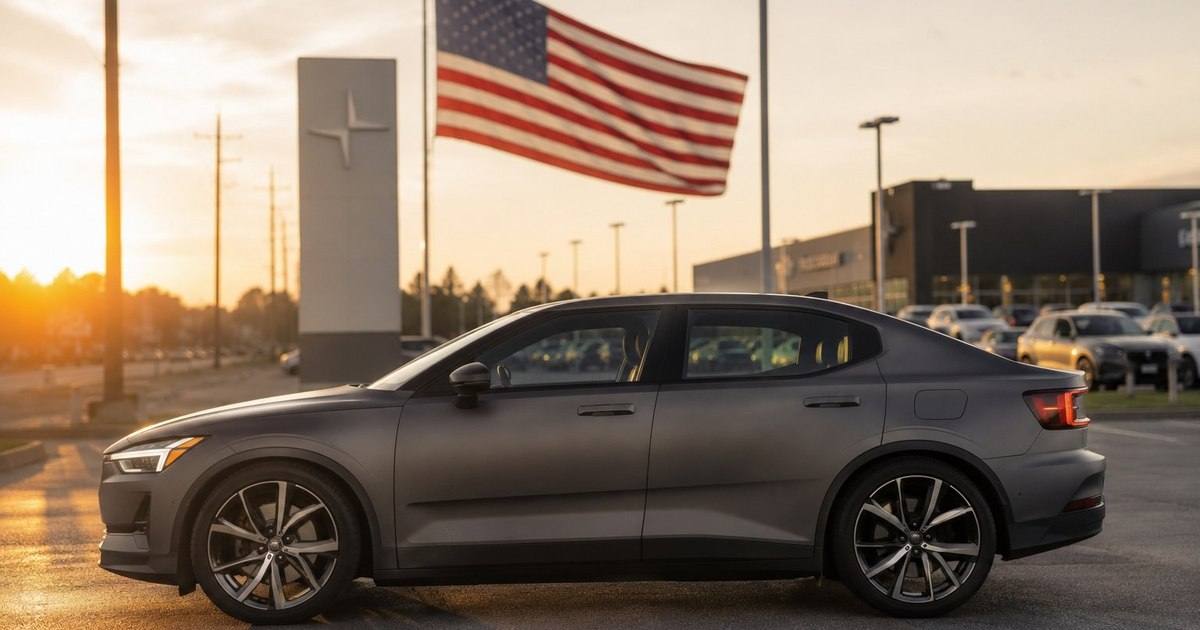
Starting with the 2027 model year, Polestar will not be allowed to sell a single new car in the United States. Not because of crash ratings, not because of reliability complaints, and not because Americans stopped wanting electric hatchbacks that look like a Volvo went to art school. The reason is ownership.
The U.S. Department of Commerce's Bureau of Industry and Security denied Polestar authorization under the Connected Vehicle Rule, a regulation finalized in January 2025 that restricts the sale of cars containing connectivity hardware or software tied to China or Russia. Polestar is majority owned by Geely, the Chinese automotive group, and that single fact is enough to shut the brand out of the market, regardless of where any individual car is actually built.
The twist: its sister brand got a pass
Here's where it gets genuinely strange. Volvo, also majority owned by Geely, was approved to keep selling its 2027 lineup in the US. The Polestar 3 SUV is assembled in Charleston, South Carolina, on domestic soil, and it's still getting shut out while its Swedish sibling sails through. The Commerce Department hasn't explained the discrepancy, and Polestar itself said it was simply denied the special authorization Volvo received after demonstrating its data security practices.
Same parent company, same connectivity concerns on paper, two completely different outcomes.
Polestar has decided not to fight the decision. Rather than pursue an appeal, the company is redirecting its attention toward Europe, where CEO Michael Lohscheller says the brand sees its strongest growth engine. That's an easier call than it might sound: the US accounted for roughly six percent of Polestar's global retail sales, so walking away isn't the gut punch it would be for a more America dependent brand.
What happens to existing Polestar owners
If you already own a Polestar 2, 3, or 4, nothing changes overnight. The company says it will keep selling remaining inventory of the 3 and 4, continue honoring warranties, and keep its US service network running. What disappears is the pipeline of new models: no 2027 model year Polestars, and no clear path back unless the rule itself changes.
The bigger picture
This isn't really a story about Polestar. It's a preview of how the Connected Vehicle Rule is going to reshape which brands can compete in the US at all. The rule bans Chinese software in connected vehicles starting with 2027 models, with a further hardware ban following in 2029, and ownership structure, not country of assembly, appears to be the deciding factor. Expect more brands with Chinese parent companies to face the same question Polestar just failed to answer.